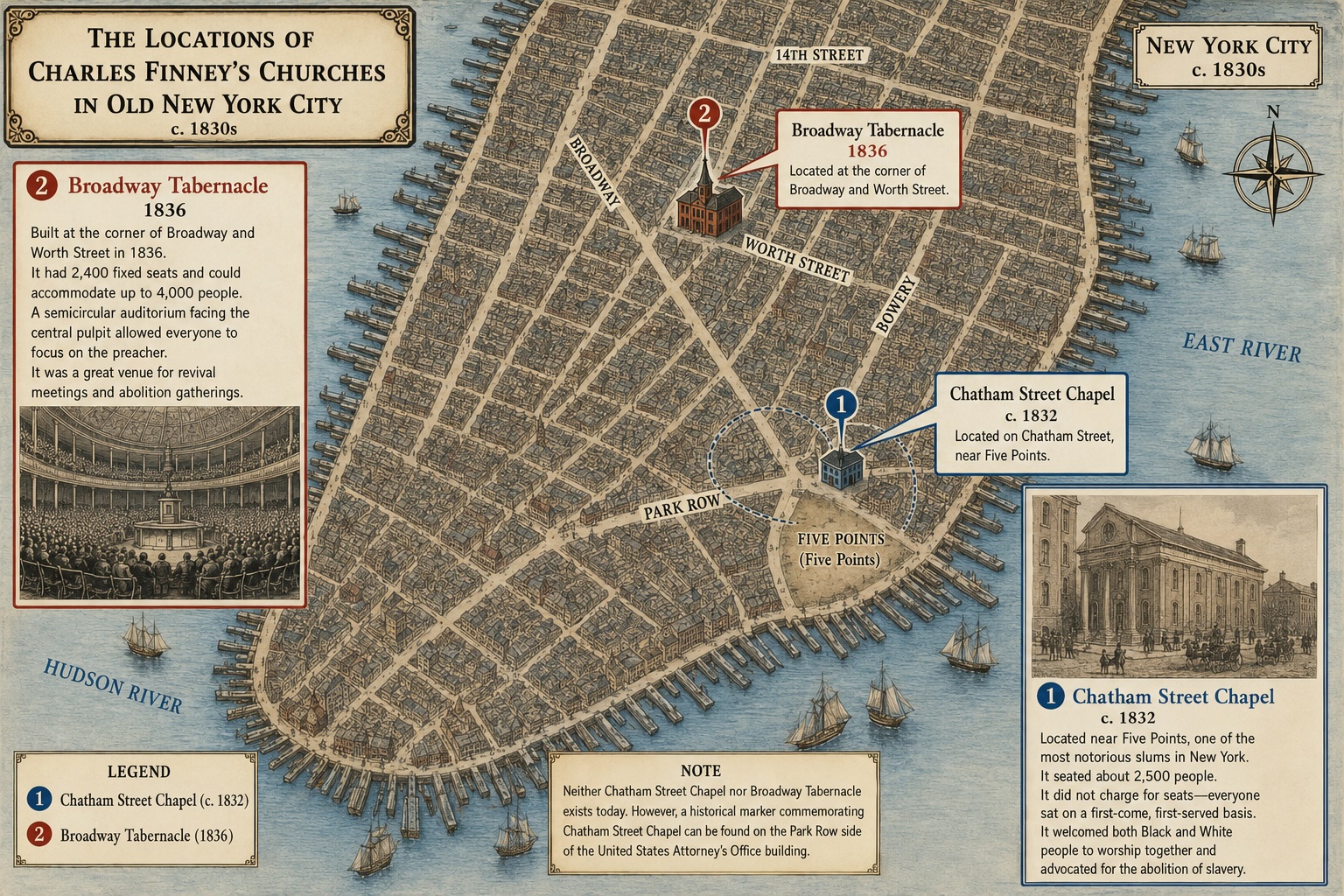
The ministry of Charles Finney, one of the leading figures of the Second Great Awakening in America, was centered largely in the eastern United States, especially in New York State and New York City. After experiencing a remarkable revival in Rochester, a rapidly growing city in western New York, Finney gained national recognition as a revival preacher.
Following his ministry in Rochester, Finney moved to New York City, the economic and cultural heart of the nation, where wealth and population were rapidly increasing. The five years from 1832 to 1837 became a period of significant innovation in the American church through his ministry.
Chatham Street Chapel
The wealthy merchant brothers Arthur and Lewis Tappan purchased the former Chatham Garden Theatre, located near Five Points, one of New York City’s most notorious entertainment districts and slums. They converted it into Chatham Street Chapel and invited Charles Finney to serve as its pastor.
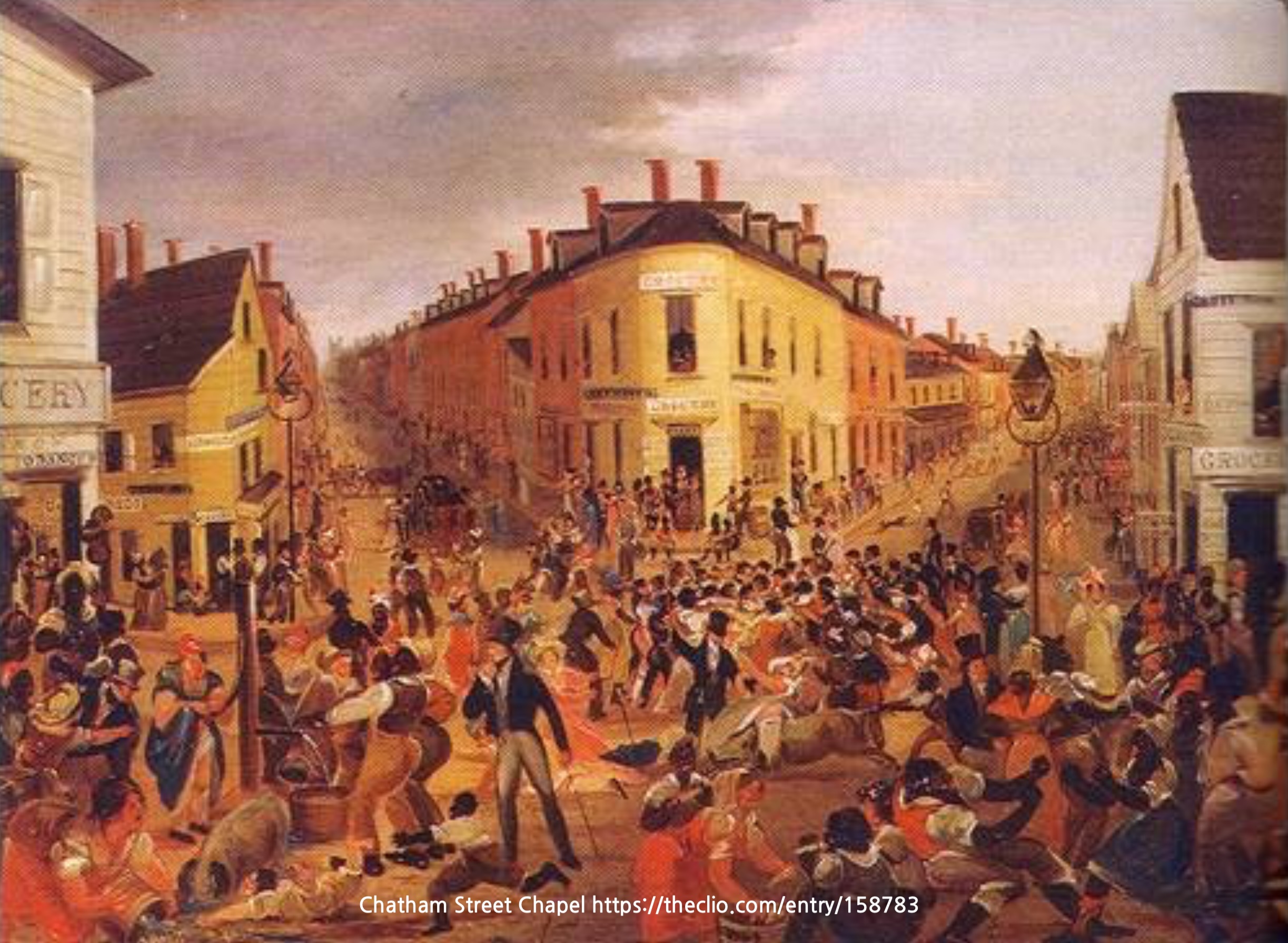
The chapel seated approximately 2,500 people, and besides its regular Sunday services, evening prayer meetings were held throughout the week.
At that time, many American churches rented or sold pews to wealthy families, allowing them to reserve the best seats near the front, while poorer people were often left in the back.
Although it seems ordinary today, Chatham Street Chapel abolished pew rentals and welcomed everyone to sit wherever seats were available on a first-come, first-served basis.
Because Five Points was home to many laborers and poor families, most members of the congregation came from low-income backgrounds. The church also boldly opposed slavery and welcomed Black and White believers to worship together as equals.
This practice provoked hostility from many conservative White working-class residents, and on several occasions mobs stormed the church and vandalized its property.
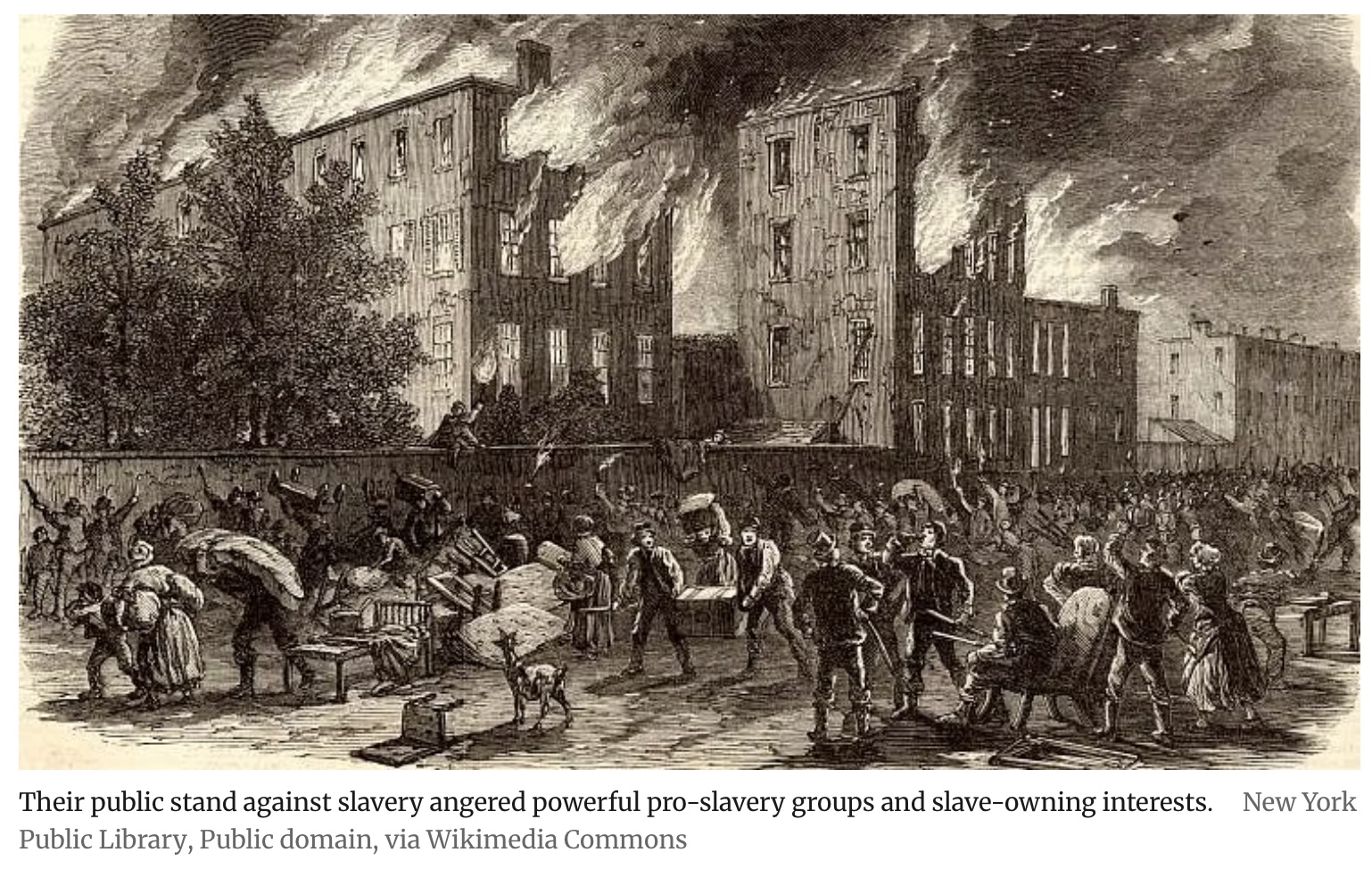
Nevertheless, Charles Finney and his supporters, Arthur and Lewis Tappan, remained committed to establishing a church in New York that was founded upon the gospel.

The Invitation to Salvation (Altar Call)
During Finney’s revival meetings, a long bench was intentionally left empty at the front of the sanctuary. He called it the “Anxious Bench.”
This seat was reserved for people who, during the sermon, became convicted of their sins by the Holy Spirit or who were deeply burdened and troubled about their spiritual condition. Finney would invite them by saying, “Rise from your seat now and come forward.”
Those who came to the front received focused prayer, counseling, and spiritual guidance from Finney and his ministry leaders during the latter part of the meeting.
This practice reflected Finney’s conviction that people should make an immediate and public response to God’s call.
Later, this emphasis became even more established through Phoebe Palmer’s “Altar Theology” in New York and eventually developed into the Altar Call tradition popularized by revivalists such as D. L. Moody.
Today, many churches around the world continue this tradition as an important evangelistic tool, and many revival preachers throughout Africa likewise invite people to make a public commitment to Christ through similar calls for decision.
Broadway Tabernacle
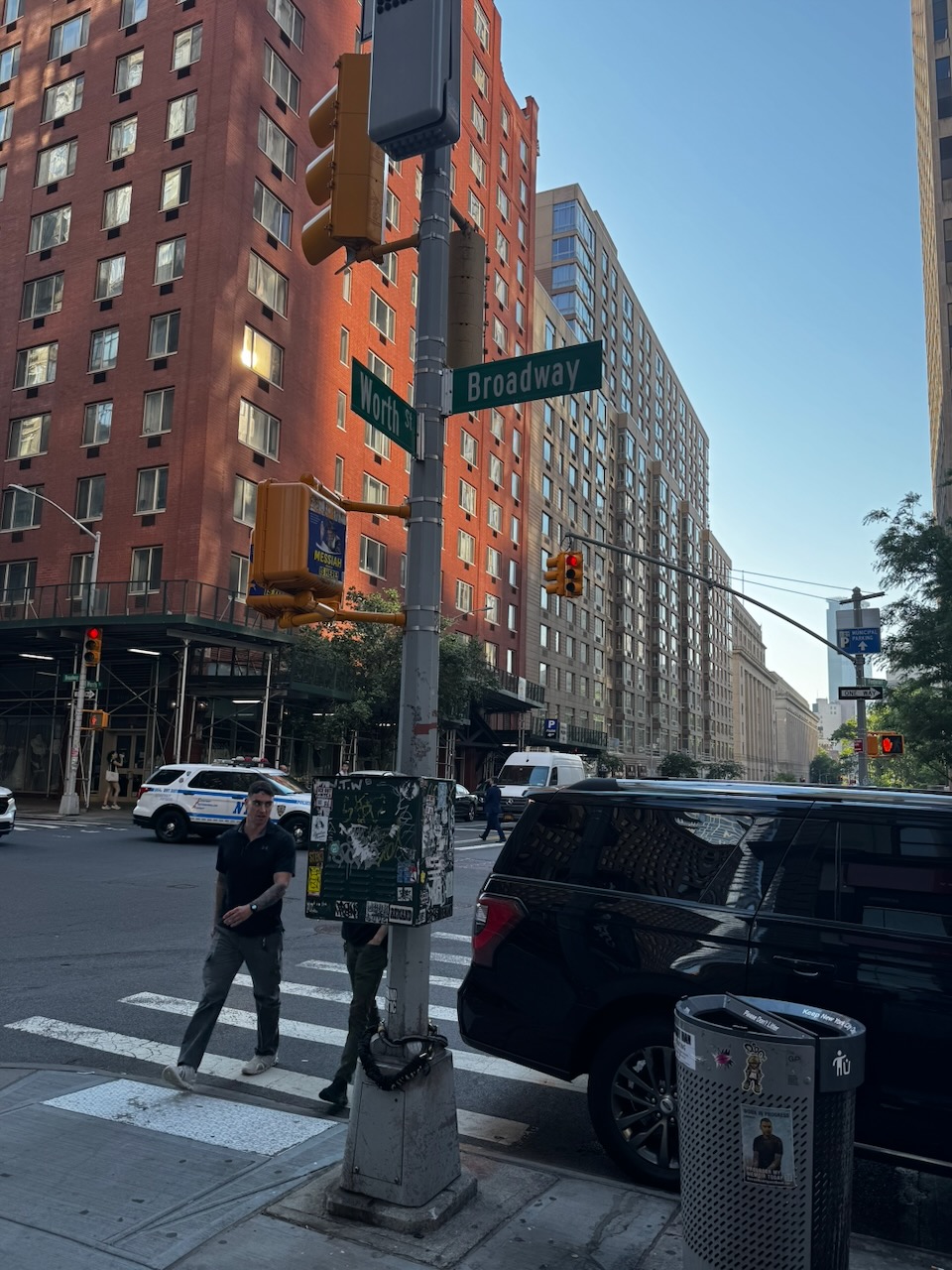
As Chatham Street Chapel became too small for the growing crowds, the Broadway Tabernacle was constructed in 1836 at the intersection of Broadway and Worth Street.
The building contained 2,400 permanent seats and could accommodate up to 4,000 people, making it one of the megachurches of the nineteenth century.

Its auditorium was designed in a semicircular, theater-like style with gently rising seats facing the central pulpit, visually expressing Finney’s emphasis on preaching-centered worship and keeping the congregation focused on the speaker.
The large open central area and wide aisles also made the building highly suitable for special revival meetings and abolitionist gatherings.
Sadly, neither Chatham Street Chapel nor the Broadway Tabernacle remains today.
However, visitors can still find a historical marker commemorating Chatham Street Chapel on the Park Row side of the building now occupied by the United States Attorney’s Office, preserving the memory of this influential ministry in New York City.

'Publications' 카테고리의 다른 글
| Vergelegen (2) – Greed and Downfall (0) | 2026.04.06 |
|---|---|
| Vergelegen (1) (0) | 2026.04.05 |